Wednesday, June 24, 2009

Vanish 3: Weak points and conclusion

The weak points of Tom Pawlik’s Vanish are annoyingly hard to explain. And I'll break precedent by taking issue with something that almost certainly isn't Pawlik's fault.

Design. I was tempted to write "unintelligent design," but the designer is likely a wonderful person who for some reason likes goofing up books. I don't usually complain about such matters--others cavil at covers; I don't--but here the "design" creeps into the book as such. Covers, I ignore; pages, I can't. And here the upper part of the right page is smudged (something I can do for myself, thank you) and the first page of each chapter is presented in an odd, narrow-column format that I found distracting. But again, I doubt that's Pawlik's fault, and I generally concentrate on the text.

Double, double... Things are not as they seem, and sometimes a character turns out to be an impostor--that is, it's really one of the gray things impersonating the other person. But there is a character that simply is two different entities, a human being and a spirit being--and the spirit, though mostly malevolent, sometimes seems to be pointing Godward. (For those who've read the story, this is the character who has the final line.)

Clever, not deep. The ending is clever--it's funny, in a macabre fashion--but a deep ending might involve someone, perhaps a boy, entering the room and saying, "One of your friends asked me to visit you. We need to talk."

A life-and-death issue. This is the major drawback for me, and I'd bet that hardly anyone will notice it because it's more assumed than stated. It's the idea that near-death is death, that God can't truly reach beyond normal consciousness.

(Someone will cry foul here, based on a rescue scene near the end. But that is more a physical than a spiritual rescue, postponing matters until a normal decision in normal circumstances can be made.)

If someone is fatally injured and lingers briefly in a coma, apparently cut off from the world around him, is he as good as dead? Or can God reach him in those last moments? If God can't reach him, then perhaps we may as well pull the plug on anyone in a coma. There are two arguments against this.

First, there are numerous cases where God dealt with people in their sleep through dreams. If he can do that, he can reach someone vegetative or in a coma.

Second, there are biblical references to our inability to prolong life. In Matt. 6:7, Jesus says we can't add an hour to our lives by worrying; in Eccl. 8:8, we read that since we can't retain our spirit, we can't control death--in context, we can't prolong our lives. So if someone is on life support, we can't prolong his life with all the gadgets; when his time comes, he'll die, no matter what anyone tries. But we can hasten death, and that's what happens when we pull someone's plug. As long as someone is alive, he can be reached; ending his life prematurely is wrong. The writer seems ignorant of this, as many Christians are. Is it any wonder abortion is still legal when even Christians can't understand the nature of such actions?

Conclusion. However, I doubt most people will notice this line of thinking, and otherwise it is a good story well told. So while I think it could easily have been better, it is still well above average and definitely worth a look.

Again, for anyone interested, my novella Galatea is available for download in PDF form.

Let's have a last look at this month's tour...
Brandon Barr
Justin Boyer
Keanan Brand
Grace Bridges
Karri Compton
Amy Cruson
CSFF Blog Tour
Stacey Dale
D. G. D. Davidson
Jeff Draper
April Erwin
Karina Fabian
Alex Field
Beth Goddard
Todd Michael Greene
Ryan Heart
Christopher Hopper
Joleen Howell
Becky Jesse
Cris Jesse
Julie
Carol Keen
Krystine Kercher
Margaret
Rebecca LuElla Miller
Eve Nielsen
Nissa
John W. Otte
John Ottinger
Donita K. Paul
Epic Rat
Crista Richey
Hanna Sandvig
Chawna Schroeder
James Somers
Speculative Faith
Rachel Starr Thomson
Robert Treskillard
Steve Trower
Fred Warren
Phyllis Wheeler

Tuesday, June 23, 2009

Vanish 2: Good points

Note: For reasons I don't understand, this post was not published this morning according to schedule. I apologize for the delay.

So on to the good points of Tom Pawlik’s Vanish.

A positive negative. The main strength, to my mind, is a negative, like congratulating someone for not throwing up on your carpet. And to explain, I'll have to digress a bit.

Vanish is listed as "suspense," which can mean anything from "a page-turner" to "something so nauseating the writer should be put away for life." (For the curious: Vanish is the first, not the second. Resume breathing.) But it's an annoyingly vague, catch-all genre. So to end some of the suspense, I'll note that a story with faceless humanoids that lurk whispering in the shadows and only evince mouths by a process like tearing skin--such a story is horror.

That's not inherently bad. Properly done, horror can be deeply theological, and Vanish does a good job. (I'll get to a theological complaint tomorrow, but this works far better than I might have feared.) And that gives the back-handed compliment that matters most to me: Pawlik doesn't do anything obnoxious or stupid. This is no small feat. Most horror and thriller writers seem entranced with the sheer ickiness of their subject, but while Vanish is certainly suspenseful, it isn't gross and doesn't glorify violence or evil. I can actually recommend it to friends, which is uncommon these days.

Suspense as such. A page-turner, that is. I've already said it, but it bears repeating. This is not the sort of book you'll put down easily, and it isn't a good choice if you have other things to do. If you have time to sit and read--if you want a beach book or have a long plane ride--it's an excellent choice.

Characters. These are generally strong and well developed, and I at least cared whether they lived or died. There's a little unevenness in the development: Conner, Helen, and Mitch all have the same kind of Dark Secret in their past, and how they deal with it influences their destiny, with a little more distance granted those with less-happy outcomes. But the outcomes matter, just as the characters do.

Tomorrow we'll look at some weak points.

In the meantime, for anyone interested, my novella Galatea is available for download in PDF form.

Time for another look into the netherworld of the CSFF blog tour...
Brandon Barr
Justin Boyer
Keanan Brand
Grace Bridges
Karri Compton
Amy Cruson
CSFF Blog Tour
Stacey Dale
D. G. D. Davidson
Jeff Draper
April Erwin
Karina Fabian
Alex Field
Beth Goddard
Todd Michael Greene
Ryan Heart
Christopher Hopper
Joleen Howell
Becky Jesse
Cris Jesse
Julie
Carol Keen
Krystine Kercher
Margaret
Rebecca LuElla Miller
Eve Nielsen
Nissa
John W. Otte
John Ottinger
Donita K. Paul
Epic Rat
Crista Richey
Hanna Sandvig
Chawna Schroeder
James Somers
Speculative Faith
Rachel Starr Thomson
Robert Treskillard
Steve Trower
Fred Warren
Phyllis Wheeler
Monday, June 22, 2009

Vanish 1: Intro

This month the CSFF Blog Tour is doing Tom Pawlik’s Vanish. Curiously, it's not a cleanser as I expected, at least not a good one; I strongly advise against using it to clean a toilet, especially before reading it. On the other hand, it's quite good as a book, much better than the other stuff and not nearly as irritating. (Watch this blog for my upcoming analysis of whether product placement pays off.)

Anyway--what's the book about? (Hands up, everyone who expects a page count!) Well, according to the Library of Congress Cataloging-in-Publication Data, it's about lawyers, models (persons), mechanics (persons again), and storms. Note that apparently neither storms nor lawyers are persons; this seems correct.

Specifically, the lawyer is Conner Hayden, biologically male, though the species may make it hard to tell. As the story opens, he is impersonating a rat, to the consternation of all true rodents, encouraging some nice people to sue a nice doctor and gain a small settlement while losing their own souls. And on the topic of losing one's soul, today he keeps seeing people without faces. As a lawyer, this shouldn't be a new experience, but somehow it troubles him. Maybe he likes the look of fear.

He heads home to his splendid solitude, marred only by a side-trip to his past: an ex-wife, an ex-daughter, and a personal tragedy to be named later. By contractual obligation he brings his daughter home, and as a matter of paternal indulgence doesn't sue her for anything. Yet.

Following an argument in which his daughter claims to be doing the religious thing willingly, not under coercion, he steps out to see whether there's a mysterious, plot-launching cloud around, as the Weather Channel claimed. There is. Curses. He can't sue them this time.

Meanwhile, sometime model Helen Krause is being told that she's too old to act her age. She heads home to find her son, Kyle, and a birthday/farewell party: he's leaving town (and her) for better things. Distraught, she decides to step outside to look for unearthly storm clouds. She's in luck--or not...

Meanwhile again, Mitch Kent, a mechanic (person), is finalizing plans to buy a garage and get engaged to his girlfriend. He's too well organized to buy his girlfriend and get engaged to a garage, which is just as well. However, he too develops a kind of familial crisis: his long-despised and -ignored father calls up to say that he (the father) has cancer and wants to patch things up. Annoyed that his father would call him just to die at him, Mitch hops on his motorcycle and heads off to propose to his girl, completely ignoring a storm warning on the Foreshadowing Channel. Sure enough, he soon sees a strange cloud in the mirror, right above the note that "Objects in mirror may be uncannier than they appear."

The next thing the three know, they come to roughly where they saw the storm. There's no sign of anyone else, but instead of assuming that they've missed the Rapture (not really on their personal radar anyway) they decide to go looking for everyone and bump into one another and a few other leftovers. Along the way they also have disturbing visions from their past--well, Conner and Mitch do; Helen doesn't so much for some reason. And Conner keeps having these searing chest pains.

But the real creep factor is that they occasionally spot people-like objects in the shadows. These creatures have no faces, but they still whisper a lot. They also turn out to be immune to gunfire, which is a bit annoying. Worse yet, from Conner's standpoint, they have no respect for subpoenas. Oh, and from time to time they grab someone and drag him off screaming to his doom. (I hate when that happens!)

Is it an alien invasion? Are they victims of Rod Serling's posthumous powers? What happens when you say "Langoliers" backwards? For answers to completely different questions--mostly "What are the strengths of Vanish, at least as compared to Comet?"--tune in again tomorrow.

Meanwhile, check these links to see whether a mysterious storm has waylaid the rest of the CSFF Blog Tour:
Brandon Barr
Justin Boyer
Keanan Brand
Grace Bridges
Karri Compton
Amy Cruson
CSFF Blog Tour
Stacey Dale
D. G. D. Davidson
Jeff Draper
April Erwin
Karina Fabian
Alex Field
Beth Goddard
Todd Michael Greene
Ryan Heart
Christopher Hopper
Joleen Howell
Becky Jesse
Cris Jesse
Julie
Carol Keen
Krystine Kercher
Margaret
Rebecca LuElla Miller
Eve Nielsen
Nissa
John W. Otte
John Ottinger
Donita K. Paul
Epic Rat
Crista Richey
Hanna Sandvig
Chawna Schroeder
James Somers
Speculative Faith
Rachel Starr Thomson
Robert Treskillard
Steve Trower
Fred Warren
Phyllis Wheeler

Sunday, May 31, 2009

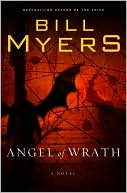
Angel of Wrath 2: Problems


Unfortunately, the problems in Bill Myers' Angel of Wrath are legion.

Wallowing. I've found that there is a feel to most thrillers that's troubling, and this story follows that trend. It's as though the writer revels in the violence, fear, and death, and that's just wrong. The focus here seemed thoroughly negative. No doubt there's some kind of amazing epiphany later, but I don't think it's possible to go negative for two-thirds of the story and suddenly reverse the effect on the reader in probably well under one-third.

Holier Than They. Also, there's a kind of sanctimony involved here, and it's a bit misplaced at times. For example, there's an undercurrent of glee in the sinful churchgoers getting theirs. Now, most of the victims have some kind of moral or ethical problem--put more bluntly, they are sinning in some fashion explicitly condemned in Scripture. (Some might argue about the abortionist, but I think even many "pro-choice" people will admit that there's an understandable problem.) But there is an odd man out--supposedly a false teacher. While I am not an evolutionist, I don't see that an evolutionist would necessarily be a false teacher from a Biblical standpoint. His teaching is in a secular context (as a high-school teacher), not in the context of teaching Scripture or doctrine. The remarks about evolutionary racism are also ill-considered. While some racists have justified their views through evolution, some have used the Bible for the same purpose. Christians shouldn't engage in strawman tactics.

Evil Christians! I can understand wanting to avoid an unnecessarily rosy portrayal of Christians, but here Christians actually seem more evil than others. The pastor is more concerned with image than with God. His father (also a pastor once) sexually abused his own daughter. Then there are the aforementioned Sinners In The Hands Of An Angry Psycho. I guess it wouldn't bother me so much if there were a counter-balance--an opposing view that would relieve the bleakness. The closest thing is the Praise-and-Worship geek, and since she's an unbiblical pop-theology construct, that's no great comfort.

Fairness Doctrine. The author gives more time to some bad theology than I'm comfortable with. There's a bit more detail on Black Mass than is necessary--I know kids can find out that sort of thing on Wikipedia, but we shouldn't do the lookups for them. A fair amount of the bad stuff is imitable, and the Coolness Factor of reproducing some of it will far outweigh the clearly fictional consequences.

We Don't Need God; We Have Physics! There's a strong tendency these days to rationalize God into some really quirky quantum phenomenon--another troubling trend this story follows. Apparently in the previous episode, a machine--a non-spiritual object--enabled people to access the Voice of God. Jazmin, a quasi-prodigy, becomes God-conscious as a result, and that enables her to pick out the Praise Geek as the Only One Who Gets What's Happening.

One of the things that bothered me was the whole business of bringing in string theory and vibrations, as though string theory is going to reduce God to a formula or phenomenon. Also, the use of the Fall of Jericho and Jehoshaphat's victory over the invading armies is inaccurate. What brought the walls down in the first case was obedience to God's command, and the fighting that followed was apparently normal. The idea that sound was involved is a back-reading of modern faith in physics. That leaves us with Jehoshaphat, where again obedience was probably the key, yet even so it's anomalous: the exception, not the rule. Normally, God expected the warriors to do their job, not stand around while the praise band did its thing.

We Don't Need No Steenkin' Prayer! While I haven't finished the story, I strongly suspect that the demon is routed by by an Amazing Praise and Worship Extravaganza. This is nonsense. Contrary to what many believe, such things don't really bother Satan. Think about it: presumably the continuous chorus of praise in Revelation has been there for some time, yet Satan still came before God in Job without apparent trouble. On a personal level, some of the worst Satanic activity I've encountered occurred in a worship setting.

This calls for a quote or two:

Cindy the Praise Geek: "What would you think if I contacted a few of the choir members and we got together?"
"For prayer?" [the pastor] asked.
"No, uh--"
"For singing," Jaz interrupted.
[small cut]
"I could call them up," [Cindy] said. "The ones who wanted could meet us over at the church."
"To sing," [the pastor] repeated.
"To...worship, yes. And we could pray, too." (pp. 198-199, ellipses in original)

Prayer is apparently an afterthought here.

The Envelope, Please. Okay, I just checked the ending. Singing, not prayer, is the big deal. Maybe Jesus should've said, "This kind doesn't go out except by Praise and Worship." Reality check: the song in question is used by various non-Christian groups. It has no inherent power to drive out demons, and as mentioned above, praise and worship have no noticeable effect on Satan. Oh, and familial love (with repentance, yes) turns out to be strong enough to clock a demon. (And it is familial love: it is stated in precisely those terms on p. 288.) But only God's love could succeed there; human love of any kind is too weak.

Conclusion. So this winds up being a pop-theology fantasy of a dangerous kind: it encourages false views that could harm those who believe them. And the attitude issues don't help. If you don't like thinking through implications and don't care about theology, you'll probably like the book. Otherwise, skip it.

Angel of Wrath 1: Intro and good points


This will be an odd review: I haven't finished Bill Myers' Angel of Wrath, and I don't intend to. Yes, the review's going to be rather negative. But I'll start with an overview and some strong points.

Overview: Someone has decided to remove erring members of Calvary Cathedral from the church forcibly and permanently. Calvary Cathedral is a stereotypical megachurch that has lost its way and soul during its quest for ever more members, so it's not hard to find sinners in its midst.

The senior pastor happens to have a sister with an FBI background, and she has a quasi-boyfriend with a Special Forces background, who in turn has a niece with a deaf background. (A deaf foreground, too. But I forgot to mention her uncanny sensitivity to spiritual things, a sensitivity owed apparently not to God but to Man: human technology, that is.)

Meanwhilst, a would-be coven is sacrificing cats and good taste in an attempt to conjure up Something. Little do they know. Oh, sorry, that should have been, "Little do they know that their group is secretly led by the guy committing all the church-related murders." (They still don't know much...) This leader is ex-Special Forces himself, so soon he and the pastor's sister's squeeze-only-not are comparing personal badness. Come on, guys, just see who'll eat the nastiest bug or something!

Anyway... The Bad ex-Special Forces guy believes that Jesus and Satan have decided to bury their personal hatchet, but they still want to purge sinners from whatever megachurch is handy. It's a logic hole you could drive a spirit apparition through, and that's handy as well. Yes, it's the pop-culture creature from Hell, and it's running amok. This is good, because otherwise amok would drift about aimlessly, which can be messy.

However, Calvary Cathedral has a secret weapon in the form of...well, I guess I could call her a praise and worship geek. Tune in again tomorrow for why that's disturbing.

Good points. Basically, the pacing and action are good. Also the bad guy's fate is reasonable.

[Addendum: It's been pointed out that the resolution of the relationship between the ex-FBI sister and her dad is well handled. That is true; it's one of the redeeming features of the story, and I should've mentioned it. The resolution of the breach between pastor and son works less well, however, being based on modern, extra-biblical ideas, so they somewhat cancel each other out.]

Wednesday, May 20, 2009

Tuck 3: Weak points and conclusion

Time fo a bug check on Stephen R. Lawhead’s Tuck.

Language. I am a language geek, as I've said many times already, and there are a number of issues here. To begin with, I strongly doubt that "Rhi Bran y Hud" could become "Robin Hood." ("Ribbon Hid," maybe...) About the only way to account for such a thing would be to posit that "Robin Hood" already existed as a generic term for a robber (perhaps even as the trickster character already mentioned) and the two merged.

Then there's the fact that Friar Tuck, repeatedly identified as a "Saxon," persists in using the Irish term "boyo." Perhaps he picked it up from an Irish priest.

The languages proper are harder to justify. The French strikes me as the sort of thing you might get from BabelFish. The Latin is also problematic: Tuck at least once uses "pax vobiscum" in addressing one person (pax tecum). Lawhead uses "Cymry" for "Welsh" or "Welsh people," even though it specifically refers to Welsh people as an ethnic group, not to the individual cymro or cymraes or to the language (cymraeg). And so on. But especially, the more French you know, the harder this is to read.

Kumbaya, M'Lord! There's what I consider an unwarranted sunniness here in places, where most everyone's heart is eventually in the right place and We Really Need to Sit Down and Talk. He sets up for this, though sometimes to the point of making the outcome obvious or at least likely. Lawhead isn't reflexive about this optimism, however: Tuck's initial efforts are thwarted by good-old-fashioned evil. (Huzzah!) But would he even have tried? I'm not sure. The idea that he had a "Christian duty" to seek peace under such circumstances probably wouldn't have occurred to the average eleventh-century cleric. A modern one would think of it, however. It's a backreading of modern attitudes, in other words.

Syncretism. I admit that this is a hot button for me. The venerable Angharad is not simply a prophetess but a banfaith, a kind of druidic oracle, and although she makes Christian allusions, she does so through a pagan filter. What's with the Bird Spirit gear? And how does this influence the whole King Raven getup? Is this Christian-flavored paganism or pagan-flavored Christianity? The direction matters. When you reconstruct Greek philosophy with a Christian foundation, you wind up with Aquinas; when you reconstruct Christianity with a foundation of Greek philosophy, you get the Gnostics. I firmly believe that different culture should express Christianity in different forms but with the same content: Japanese Christianity should differ from American Christianity just as its hymns should. But the doctrines should be the same, however much their expression may vary, and pagan influences should be resisted. That doesn't appear to occur here, which is troubling at least.

Snarkiness. C. S. Lewis wrote that each age is blind to its own faults and alert to those of its predecessors. There's a certain amount of that here. While the clerics in general are good guys (Cardinal Flambard in particular is more positive a figure than I would have expected), there's a bit of a sneer about certain Medieval beliefs. While I don't consider myself an expert on praying for the dead and related concepts, I do think Lawhead is making a lot of noise about a splinter in someone else's eye, which leads me to wonder where a beam may be lurking. (This is particularly true when he goes out of his way to Christianize paganism in the person of the banfaith.) I usually observe that "Accuser of the Brethren" is not a title Christians should covet. Am I committing the same fault? Perhaps, though my goal isn't a comparison of personal godliness so much as a warning about a common temptation.

In any case, I do find it amusing that this very "fault" becomes in part the solution to the main conflict in the story. For the idea that killing even in wartime has undesirable consequences will lead to decreased willingness to kill, especially when an alternative presents itself.

Conclusion.
So what about the book as a whole? If you know French, get a copy from a library, friend, etc., and check your tolerance. Otherwise, you'll probably find it an engaging yarn. Just avoid the snark and keep a skeptical eye on the banfaith.

Work your way through the CSFF Rogues' Gallery for more:
Brandon Barr
Jim Black
Keanan Brand
Rachel Briard
Grace Bridges
Valerie Comer
Amy Cruson
CSFF Blog Tour
Stacey Dale
D. G. D. Davidson
Jeff Draper
April Erwin
Karina Fabian
Alex Field
Beth Goddard
Todd Michael Greene
Ryan Heart
Timothy Hicks
Christopher Hopper
Joleen Howell
Becky Jesse
Cris Jesse
Jason Joyner
Kait
Carol Keen
Krystine Kercher
Dawn King
Terri Main
Margaret
Melissa Meeks
Rebecca LuElla Miller
Caleb Newell
Eve Nielsen
Nissa
John W. Otte
John Ottinger
Epic Rat
Crista Richey
Hanna Sandvig
Chawna Schroeder
James Somers
Robert Treskillard
Rachel Starr Thomson
Steve Trower
Speculative Faith
Fred Warren
Phyllis Wheeler
Jill Williamson

Tuesday, May 19, 2009

Tuck 2: Good points

So what are the strengths of Stephen R. Lawhead’s Tuck?

Tuck Everlasting? I admit the size of the story put me off, and I thought early on that I'd probably have a "Tuck Everlasting" reference in my review. Amazingly, I do, even though it isn't as relevant as I then believed. For the story moves so swiftly and easily that length isn't a major consideration.

You are There. Although there are places where Lawhead is, I think, reading some modern idea or attitude back into the Middle Ages, there are areas where he recreates the feel of the time well. For example, the power and mystique of the longbow comes across well—the awe and consternation of the Normans confronted with what appears to be especially malevolent magic, as well as the weapon's terrible stopping power. Likewise the general feel of the period is well handled.

Balance. On the whole, Lawhead allows his characters good and bad points, and at least some of the villains have or gain redeeming qualities. While his depiction of the Church leadership is somewhat negative, that was common at the time, and it isn't uniform. It's mostly Abbot Hugo who's the jerk; the other churchmen are more sympathetic.

Speaking of balance, have you checked what the balance of the CSFF tour has to say?

Brandon Barr
Jim Black
Keanan Brand
Rachel Briard
Grace Bridges
Valerie Comer
Amy Cruson
CSFF Blog Tour
Stacey Dale
D. G. D. Davidson
Jeff Draper
April Erwin
Karina Fabian
Alex Field
Beth Goddard
Todd Michael Greene
Ryan Heart
Timothy Hicks
Christopher Hopper
Joleen Howell
Becky Jesse
Cris Jesse
Jason Joyner
Kait
Carol Keen
Krystine Kercher
Dawn King
Terri Main
Margaret
Melissa Meeks
Rebecca LuElla Miller
Caleb Newell
Eve Nielsen
Nissa
John W. Otte
John Ottinger
Epic Rat
Crista Richey
Hanna Sandvig
Chawna Schroeder
James Somers
Robert Treskillard
Rachel Starr Thomson
Steve Trower
Speculative Faith
Fred Warren
Phyllis Wheeler
Jill Williamson
 
Powered by WebRing.